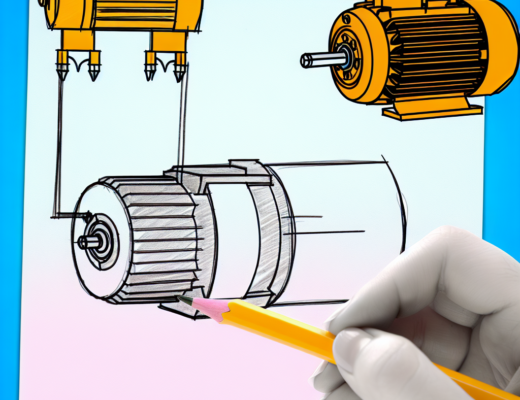
Both machines are induction motors and both work on the same principle. A rotating magnetic field in the stator induces current in the rotor, and the interaction produces torque. The difference is entirely in how the rotor is built, and that single difference changes starting behaviour, maintenance load and cost enough to matter.
What actually differs inside the frame
A squirrel cage rotor is a stack of laminations with conducting bars cast or driven into slots and shorted together by end rings. There are no connections to the outside world. Nothing wears except the bearings, and the rotor is effectively maintenance free for the life of the machine.
A wound rotor carries a three phase winding instead of bars. That winding is brought out through slip rings and brushes to external terminals, where resistance can be connected. Changing that external resistance changes the rotor circuit, and with it the torque and current the motor produces during starting.
Why external rotor resistance was such a useful trick
An induction motor produces its maximum torque at a particular slip, and the slip at which that peak occurs depends on rotor resistance. Add resistance and the peak moves towards standstill. That means a wound rotor motor can develop close to its maximum torque at the moment of starting, while drawing far less current than a squirrel cage machine started direct online.
A typical squirrel cage motor draws six or seven times rated current at standstill and produces somewhere between 150 and 250 percent of rated torque. A wound rotor motor with correctly chosen resistance can produce full pull out torque from zero speed at around twice rated current. On a weak supply, or on a load that must move from rest under full mechanical resistance, that difference decides whether the machine starts at all.
As the motor accelerates, resistance is cut out in stages until the rings are shorted and the machine behaves like a squirrel cage motor. On older installations this was done with a liquid resistance starter or a drum controller and contactors.
Where each design belongs
Squirrel cage motors suit the overwhelming majority of industrial loads. Pumps, fans, compressors, conveyors under moderate load and machine tools all start against relatively light resistance, and a direct start or a soft starter handles the inrush comfortably. The rotor needs nothing, the enclosure can be fully closed, and the motor tolerates dust, damp and neglect.
Wound rotor motors earn their place where the load is genuinely hard to start or where inertia is very large. Ball mills, crushers, large kilns, mine hoists and ship winches are the classic cases. A loaded crusher that has been left standing overnight can present a starting torque demand no squirrel cage motor of reasonable size will meet, and oversizing the motor to solve that problem wastes energy for the remaining twenty three hours of the day.
They are also useful where the supply is limited. On an isolated network, a diesel generator or a long rural feeder, the inrush from a large direct online start can collapse the voltage enough to drop out contactors elsewhere on the site.
The maintenance cost nobody mentions in the datasheet
Slip rings and brushes wear. Brushes need inspection, replacement and correct spring pressure, and the rings need periodic cleaning and eventually skimming. Carbon dust accumulates inside the machine, which is a nuisance in clean environments and a hazard in some of them.
The slip ring chamber also limits how well the motor can be sealed. Achieving high ingress protection around a brush gear assembly is possible but expensive, so wound rotor machines are less common in wet or heavily contaminated environments.
On top of that, the starting equipment itself is a maintenance item. Liquid resistance starters need electrolyte checks and level monitoring, and metallic resistance banks need inspection for cracked elements and loose connections.
What frequency converters changed
A frequency converter gives a squirrel cage motor most of what the wound rotor design offered, and more. It can deliver full torque from standstill with current well below the direct online figure, it can ramp speed smoothly, it can hold a controlled acceleration profile and it can run the machine at any speed afterwards rather than only at the fixed supply frequency.
That last point is decisive. A wound rotor motor can be run below full speed by leaving resistance in circuit, but the energy that difference represents is simply burned as heat in the resistors. A frequency converter changes speed by changing frequency, so the power drawn falls with the load rather than being wasted. On a fan or pump, that is the single largest energy saving available in most plants.
The result is that new installations very rarely specify wound rotor machines. Where a hard starting load exists, the standard answer is a squirrel cage motor with a converter sized for the required starting torque.
When keeping the wound rotor motor still makes sense
Existing installations are a different question. Where a wound rotor motor and its starter are in service and working, replacing the whole drive train is a substantial capital project. If the machine starts a handful of times per day and runs at fixed speed in between, the energy argument is weak and the payback can stretch beyond the remaining life of the plant.
Very large machines are another case. At several megawatts, converter cost rises steeply and the slip energy recovery schemes used with wound rotor machines can still be competitive, particularly where the required speed range is narrow.
There is also the practical matter of supply. Wound rotor machines are a small part of current production, so lead times are longer and stock is limited. When one fails, the realistic options are repair or conversion to a squirrel cage motor with a converter. Comparing the cost of a rewind against a new squirrel cage machine and a drive is worth doing properly rather than assuming the rewind is cheaper.
A short decision path
Start with the load. If it needs less than about 150 percent of rated torque to break away, a squirrel cage motor with a direct or soft start covers it. If the load needs high torque from rest, or has very high inertia, or the supply cannot take the inrush, the choice sits between a squirrel cage motor with a frequency converter and a wound rotor machine.
For anything new, the converter route wins on efficiency, control and maintenance. For an existing wound rotor installation running reliably at fixed speed, the honest answer is often to leave it alone and keep the brushes in good condition.